
Ferguson Anthology
Ferguson in review | Deaths of six men tied to Ferguson protests alarm activists | In Ferguson, I am reminded of Palestine

Intro
There has been a growing trend over the past year, culminating just days before the anniversary of Mike Brown’s murder, of the so-called “Emergent Left” decrying the 2010-2022 era as “Woke 1.0.” Much can be said about how white society co-opted Woke from the Black community, but it was never, and will never be, “crazy” to demand police abolition within a settler colonial state built on genocide and chattel slavery. It was never, and will never be, “crazy” to demand the destruction of an institution that murders us with impunity. And yet, here we are, watching AOC shift the Overton window to the right by condemning police and carceral abolition, a fundamental component of Black and Indigenous liberation in the U.S. Let alone the humane, decent solution towards actually reckoning with the fact that we have the highest prison population in the world, in a country where slavery remains legal so long as you are a prisoner.
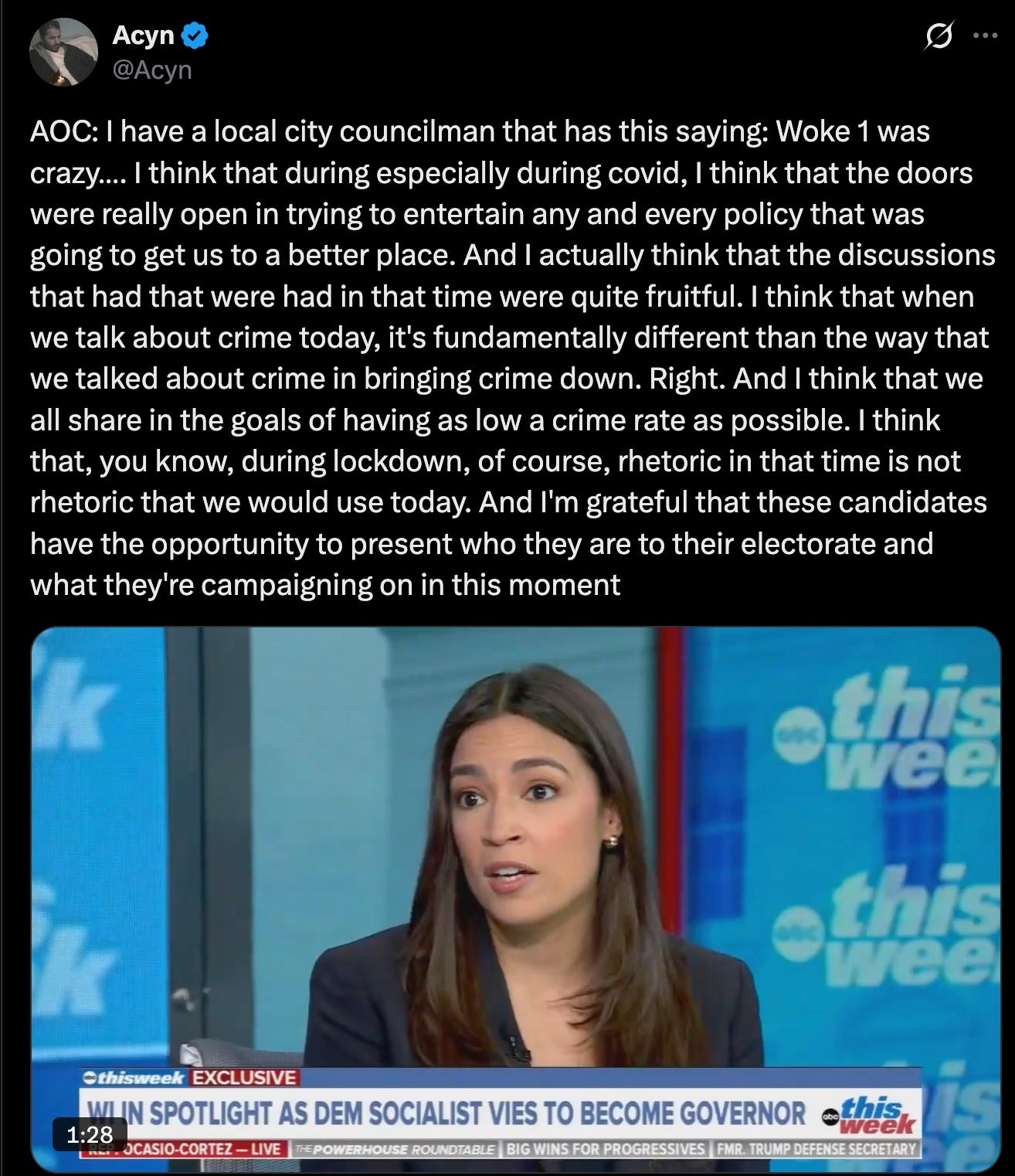
In light of this disgraceful attempt at erasure, and clear attempt to severe people from radical thought this anthology was created. Despite living in a digital age where information is readily available, we are also living in a dark age of memory. Popular figures get away with this erasure because the youth (and those who simply weren’t paying attention at the time) are not being provided the correct historical narrative, or really any information at all. We are living in the vibe-based era; it’s enough to “feel” like an analysis is true if you like the person saying it. People are alienated and even shamed from looking at recent history through a historical materialist lens.
People get excited about having younger faces in office, but what many of us fail to realize is that unlike their boomer counterparts, they are far more in tune with contemporary culture and the issues that matter to young people. That insight doesn’t make them allies, it makes them infinitely more dangerous. It gives them the tools to manipulate narratives, to speak our language while serving the same old empire, to convince you they’re different when they’re just better at performing radicalism. They are all fundamentally opportunists who grifted off a genocide livestreamed to the world, who boosted their careers on empty platitudes about stopping the mass slaughter of babies and children while doing nothing to actually stop it. Safety, transformation and revolutionary change can only be found amongst the masses and through accurate remembering.
Review of Ferguson uprising from Equal Justice Initiative
White Police Officer Shoots and Kills Michael Brown in Ferguson, Missouri
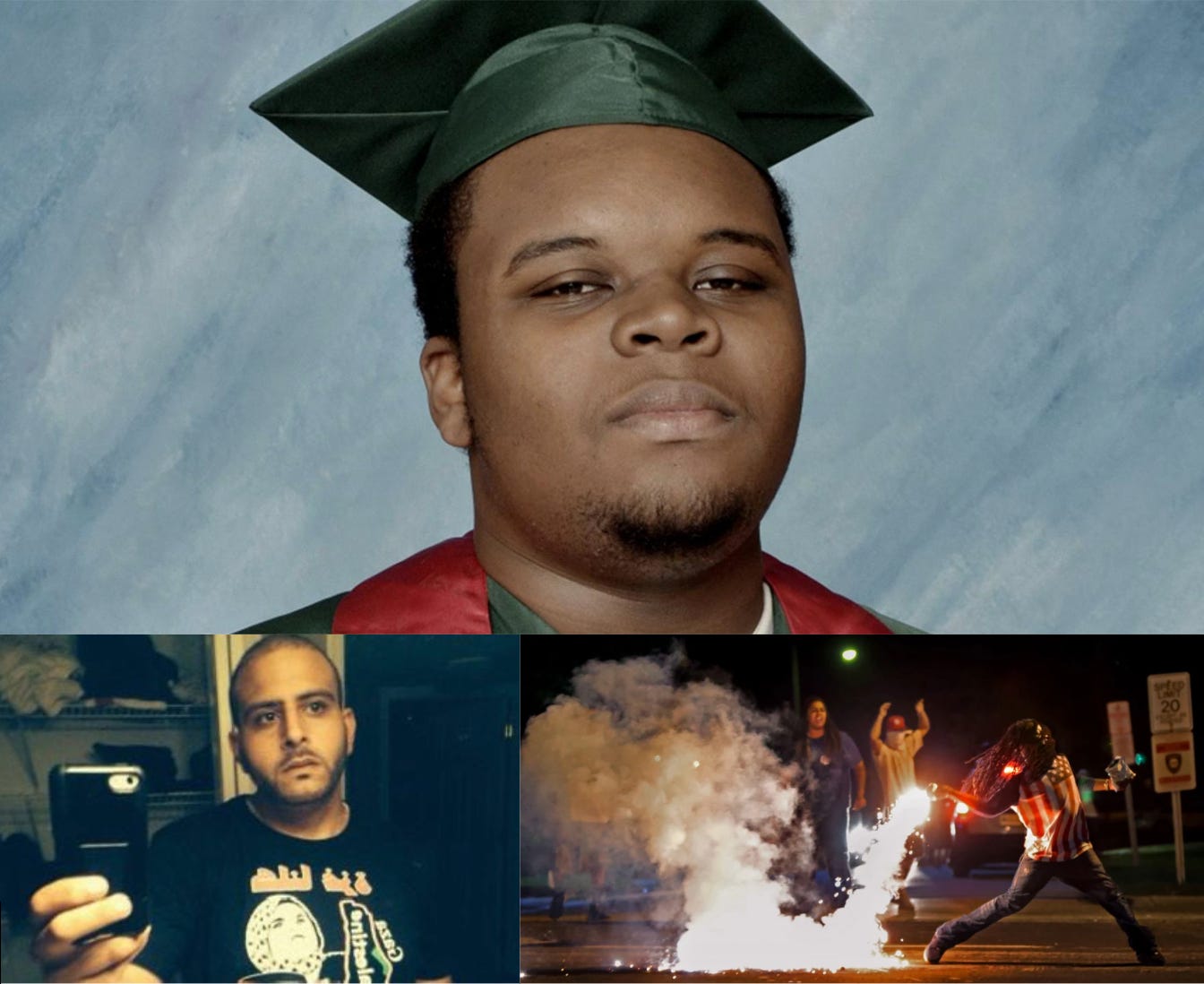
On August 9, 2014, a white police officer named Darren Wilson shot an unarmed Black teenager named Michael Brown to death in Ferguson, Missouri. According to reports, Officer Wilson stopped Michael on the street in the afternoon to ask him about a robbery at a nearby convenience store. Although the precise details of what happened next remain unclear, many eyewitness accounts suggest that Michael ran from the officer with his hands raised in the air. Officer Wilson then shot Michael six times and claimed that he had feared for his life. Michael’s body was found approximately 150 feet from the officer’s police vehicle. He had graduated from high school just eight days earlier and was scheduled to begin a vocational training program two days later.
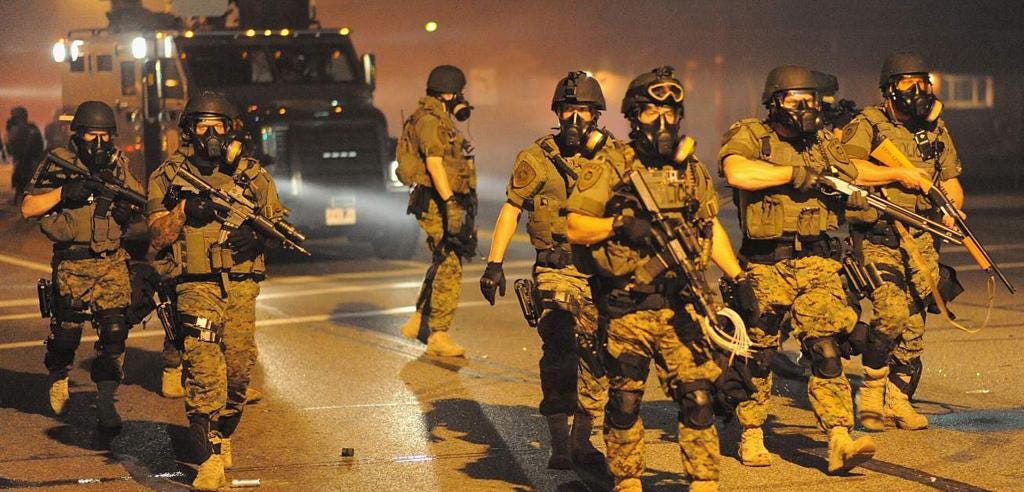
There is a presumption of guilt and dangerousness that has unfairly made people of color, particularly young Black men, targets of police aggression and violence. The shooting and its aftermath sparked weeks of protests in Ferguson and beyond. Demonstrators chanting “hands up, don’t shoot” as a rallying cry against police brutality gathered in the streets facing officers armed with military-grade equipment. Law enforcement’s heavy-handed response to the protests prompted national discussions about the militarization of police forces and the ways in which police officers use violence to repress dissent and maintain racially biased social conditions.
Despite nationwide pleas for accountability, no one was punished for Michael Brown’s death. A grand jury ultimately declined to bring criminal charges against Officer Wilson, and the Department of Justice also refused to file federal civil rights charges.
Deaths of six men tied to Ferguson protests alarm activists
The six deaths drew attention on social media and speculation among activists that something sinister was at play.
March 17, 2019, 10:32 PM EDT
By Associated Press
FERGUSON, Mo. — Two young men were found dead inside torched cars. Three others died in apparent suicides. Another collapsed on a bus, his death ruled an overdose.
The six deaths, all involving men with connections to protests in Ferguson, Missouri, drew attention on social media and speculation in the activist community that something sinister was at play.
Police say that there is no evidence the deaths have anything to do with the protests stemming from a white police officer’s fatal shooting of 18-year-old Michael Brown, and that two were homicides with no known link to the protests.
But some activists say their concerns about a possible connection arise out of a culture of fear that persists in Ferguson four and a half years after Brown’s death, citing threats — mostly anonymous — that protest leaders continue to receive.
The Rev. Darryl Gray said he found a box inside his car. When the bomb squad arrived, no explosives were found but a 6-foot python was inside.
“Everybody is on pins and needles,” Gray said of his fellow activists.
No arrests have been made in the two homicides. St. Louis County police spokesman Shawn McGuire said witnesses have simply refused to come forward, leaving detectives with no answers for why the men were targeted.
“We don’t believe either one was connected to each other,” McGuire said, but adding, “It’s tough to come up with a motive without a suspect.”
Ferguson erupted in protests in August 2014 after officer Darren Wilson fatally shot Brown during a street confrontation. Brown was unarmed, but Wilson said he fired in self-defense when the black teenager came at him menacingly.
A grand jury declined to charge Wilson in November 2014, prompting one of the most violent nights of demonstrations, and one of the first activist deaths.
Deandre Joshua’s body was found inside a burned car blocks from the protest. The 20-year-old was shot in the head before the car was torched.
Darren Seals, shown on video comforting Brown’s mother that same night, met an almost identical fate two years later. The 29-year-old’s bullet-riddled body was found inside a burning car in September 2016.
The four other deaths, including the three by suicide, were:
— MarShawn McCarrel of Columbus, Ohio, shot himself in February 2016 outside the front door of the Ohio Statehouse, police said. He had been active in Ferguson.
— Edward Crawford Jr., 27, fatally shot himself in May 2017 after telling acquaintances he had been distraught over personal issues, police said. A photo of Crawford firing a tear gas canister back at police during a Ferguson protest was part of the St. Louis Post-Dispatch’s Pulitzer Prize-winning coverage.
— In October, 24-year-old Danye Jones was found hanging from a tree in the yard of his north St. Louis County home. His mother, Melissa McKinnies, was active in Ferguson and posted on Facebook after her son’s death, “They lynched my baby.” But the death was ruled a suicide.
— Bassem Masri, a 31-year-old Palestinian American who frequently livestreamed video of Ferguson demonstrations, was found unresponsive on a bus in November and couldn’t be revived. Toxicology results released in February showed he died of an overdose of fentanyl.
The Ferguson protests added momentum to the national Black Lives Matter movement, but they also generated resentment from people angered by TV footage of protesters hurling rocks and insults at police. Amid lingering anger, activists and observers say that while they see no clear connection between the deaths and the protests, they can’t help but wonder about the thoroughness of the investigations.
“These protesters and their deaths may not be a high priority for (police) since there is this antagonistic relationship,” Washington University sociologist Odis Johnson said. “I think there is a need for them to have a greater sense of urgency.”
Activists say that in the years since the protests, they have been targeted in dangerous ways.
“Something is happening,” said Cori Bush, a frequent leader of the Ferguson protests. “I’ve been vocal about the things that I’ve experienced and still experience — the harassment, the intimidation, the death threats, the death attempts.”
Bush said her car has been run off the road, her home has been vandalized, and in 2014 someone shot a bullet into her car, narrowly missing her daughter, who was 13 at the time.
She suspects white supremacists or police sympathizers. Living under constant threat is exhausting, she said, but she won’t give in.
“They shut us up and they win,” Bush said.
It’s unclear if residual stress from the protests or harassment contributed to the suicides, but Johnson said many activists feel a sense of hopelessness.
“This has to have a big impact on their mental health,” Johnson said. “For many, law enforcement is not a recourse. Many times law enforcement is not on their side.”
Experts say the deaths also are indicative of a concern at the core of the protests — the underlying difficulty of life for young people of color. Five of the men who died were black and in their 20s.
Black St. Louis County residents are three times more likely than whites to be poor, often meaning they lack adequate health insurance that could allow them to better address not only physical ailments but mental health issues like depression and anxiety.
They also tend to live in areas with higher crime rates. The 2010 U.S. census showed that while people who live in wealthy and mostly white western St. Louis County can expect to live well into their 80s, life expectancy in parts of mostly black north St. Louis County reaches only into the 60s. Life expectancy in Kinloch, a few miles from Ferguson, is 56.
Forty-five of the county’s 60 homicide victims last year were black in a county where less than a quarter of the population is black, according to police statistics.
“Here in St. Louis, unfortunately, we have allowed the culture of crime and violence to morph into dimensions that anybody’s at risk any day, any time,” said James Clark of the nonprofit Better Family Life.
In Ferguson, I am reminded of Palestine
Shared by American Friends Service Committee Oct 28, 2014
Bassem Masri was a Palestinian activist who was very engaged in protests in St. Louis after Mike Brown was murdered. He live streamed many events around the Ferguson uprising and himself was arrested and interrogated during the protests. AFSC is sad to hear that he died this week, one of five Ferguson activists that have died since 2014. We send condolences to his family and loved ones. We honor his memory by sharing this piece he wrote for us in the summer of 2014.
As the son of immigrant small business owners from Palestine, I was taught to believe in the American dream of freedom, liberty and the white picket fence. This past summer has shattered this belief. The dream doesn’t apply to certain people in our society.
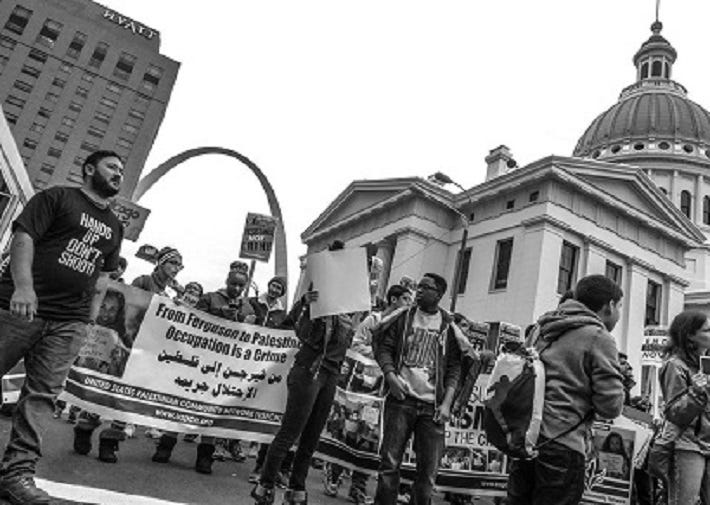
When Mike Brown was murdered in Ferguson my people in Gaza were being slaughtered by Israel in Operation Protective Edge. The timing of the two events woke up a lot of people. When Mike was killed, much of the media started demonizing him and the protestors, often the same sources that blamed Palestinians for their own deaths in Gaza. People naturally saw the connections.
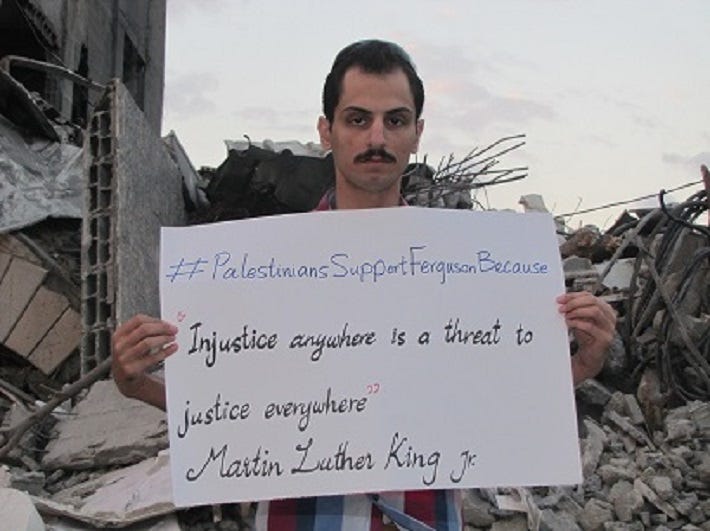
For over 66 years, mainstream America has maligned and dismissed Palestinians’ own accounts of our oppression. Now that the same kind of repression is being experienced at home, more and more black Americans see the connections and understand the Palestinian struggle. When I showed up to protest in Ferguson and introduced myself as a Palestinian, people there immediately met me with respect.
On those terrible nights in Ferguson when the police were attacking peaceful civilians with tear gas, Palestinians under Israeli occupation offered advice on how to deal with the effects of the gas. Facing violence from an occupying force, whether in Palestine or Ferguson, forges a mindset that demands resistance and standing up for one’s community. When the police used military tanks and checkpoints to imprison the residents of Ferguson, I was reminded of life in the West Bank where I saw the Israeli military use the same tactics of repression.
While the wall of segregation and inequality in Palestine is a physical one; the wall in Ferguson is invisible to those who wish to turn away. Only blacks in St. Louis understand their own situation. They face constant harassment and the fear of being detained without due process or basic dignity. When I stand with the people in Ferguson, I regard them as Palestinians. Our common goal is to live in peace and to not fear for our children’s lives when they are walking down the street.
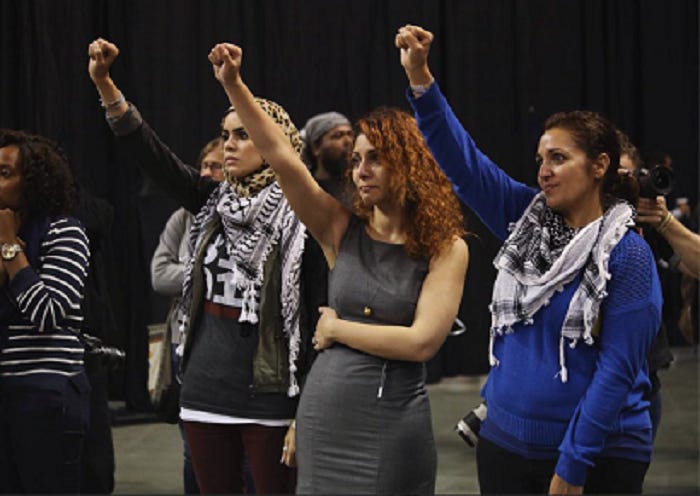
Since the day of Mike Brown”s death, I’ve been tear gassed, shot at with rubber bullets, and physically assaulted by the police. On September 27, I was arrested and taken to jail. I believe the police targeted me simply because I stand with Ferguson and have been documenting the events there with live stream.
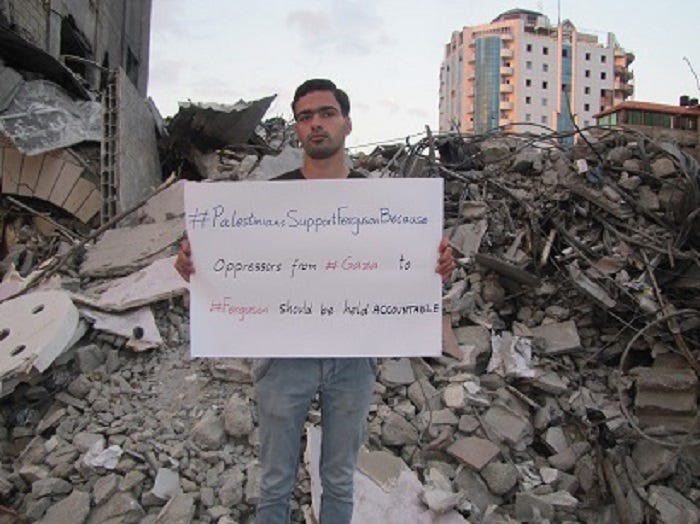
Racism drives the violence we see in both Palestine and Ferguson. In the United States whites’ fear of black people is often subconscious. In Palestine, anti-Arab sentiment is prevalent and open. The Israeli occupation soldiers have no contact with the Palestinians they control except behind guns.
Until all our children are safe, we will continue to fight for our rights in Palestine and in Ferguson. Our goal is to dismantle apartheid regimes wherever they exist. That is the most important link between Palestine and Ferguson, and it is the link that will make both struggles stronger.